Telegram vs Dating Apps in 2026: An Honest Comparison
Telegram vs Dating Apps: Which Wins in 2026?
Online dating revenue topped $3 billion in the US in 2024 (Statista, 2024), and most of that came from paid subscriptions. Telegram, meanwhile, costs nothing. So which approach actually serves singles better? The honest answer: it depends on what you want. Both have real strengths, and this comparison lays them out fairly.
Dating apps like Tinder, Bumble, and Hinge are polished, popular, and packed with features. Telegram is free, private, and low-pressure, but newer to the dating space. Neither is perfect. Below we compare cost, privacy, user base, features, and who each option suits best, with no hard sell either way.
Before we get into the details, it helps to frame the choice correctly. This is not a battle between a good option and a bad one. It is a question of priorities. A single in central London who happily pays for premium filters has very different needs from someone in a smaller city who just wants free conversation. Keep your own situation in mind as you read, and the right pick will become obvious.
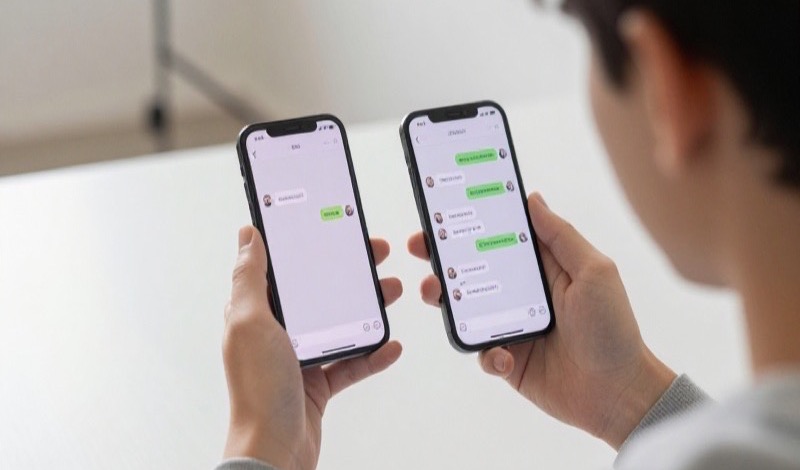
[IMAGE: Split-screen of a smartphone with two dating interfaces side by side, clean modern look - search "smartphone apps comparison desk"]
Citation capsule: US online dating revenue exceeded $3 billion in 2024 (Statista, 2024), most of it from subscriptions, while Telegram offers dating at no cost, making the real comparison less about which is best and more about which fits your priorities.
How Do the Costs Compare in USD?
The average dating app subscription now runs between $20 and $40 per month (Statista, 2024), while dating on Telegram is free. That gap is the single biggest reason singles reconsider paid apps. Over a year, premium tiers can cost more than $300, which buys a lot of coffee dates.
What Paid Apps Charge
Here is a rough monthly snapshot based on 2026 pricing pages. Numbers vary by region and promotion, so treat these as ballpark figures.
- Tinder Gold: around $30 per month for see-who-liked-you and unlimited likes.
- Bumble Premium: around $33 per month for advanced filters and travel mode.
- Hinge Preferred: around $30 per month for unlimited likes and filters.
The catch is that many core actions, like seeing who liked you or sending unlimited messages, sit behind these paywalls. You can use the free tiers, but they are deliberately limited to nudge you toward upgrading.
The Real Annual Cost
Monthly numbers hide the true bite. At roughly $30 a month, a single premium subscription runs about $360 a year. Stack on the extras most apps push, like boosts, super-likes, and visibility packs, and the yearly total climbs well past $400 for active daters. Statista's revenue figures confirm how much singles collectively pour into these add-ons (Statista, 2024).
Many people also juggle two or three apps at once to widen their odds. Pay for two premium tiers, and you are looking at $600 to $700 a year just to message the people you match with. For a budget-conscious single, that is a meaningful sum spent before a single date is even booked. The cost is not theoretical. It shows up on the card statement every month.
What Telegram Costs
Nothing. The DateWiz Telegram dating bot lets you build a profile, match, and message for free, with no subscription gating your conversations. There is no premium tier you need to buy just to say hello. For budget-conscious singles, that alone tips the scale.
[CHART: Bar chart comparing average monthly cost USD - Tinder Gold $30, Bumble Premium $33, Hinge Preferred $30, Telegram bot $0 - source: company pricing pages 2026]
[UNIQUE INSIGHT] The hidden cost of paid apps is not just money, it is the psychology. When you pay monthly, you feel pressure to "get your money's worth," which can turn dating into a chore. Free tools remove that pressure, and several singles tell us that makes the whole experience lighter.
Which Option Protects Your Privacy Better?
The Mozilla Foundation reviewed 25 dating apps and flagged the majority for weak privacy practices (Mozilla Foundation, 2024). Telegram, built around private messaging, generally gives users more control over their data. If privacy ranks high on your list, this category leans toward Telegram, though no platform is risk-free.
Mainstream dating apps collect a lot. Location history, photos, chat content, and sometimes data shared with advertisers. That is not unique to dating, but the intimate nature of the information raises the stakes. Ofcom has repeatedly warned that many users do not realize how much personal data online services gather (Ofcom, 2023).
What Dating Apps Know About You
The profile you build is only the visible part. Behind it, many apps log how long you linger on each photo, which profiles you skip, your approximate movements, and the device you use. Mozilla's review found that a number of popular apps shared or sold data to third parties (Mozilla Foundation, 2024). That data can outlive your account, sitting in systems long after you delete the app. For something as personal as your love life, that permanence makes a lot of people uneasy.
How Telegram Differs
Telegram's model is different. It is a messaging platform first, so dating happens inside private chats rather than a sprawling data-hungry profile system. You control what you reveal and when. That said, privacy still depends on your own habits. Sharing your full name, workplace, or home address too early is risky on any platform.
A bot inside Telegram asks for far less than a full dating app. There is no permanent public profile crawling the open web, no decade of swipe history attached to your name. You can hide your phone number, use a username instead, and reveal personal details only when you choose to. The platform gives you the tools; your discipline does the rest.
[PERSONAL EXPERIENCE] In our experience, the people who feel safest online are the ones who reveal details slowly, regardless of the platform. The tool matters less than the habit. Still, starting on a platform that does not demand a full data profile upfront makes that habit easier to keep.
How Do the User Bases Stack Up?
Tinder reports over 75 million monthly active users globally (Match Group, 2024), while Telegram surpassed 1 billion monthly active users in 2025 (DataReportal, 2025). The two numbers are not directly comparable, but they tell an important story about reach and intent.
Where Paid Apps Win
Dating apps have a focused, dating-ready crowd. Everyone on Tinder or Hinge is there to meet someone, which removes ambiguity. The pool is also large in major Western cities, so urban singles often find plenty of nearby matches quickly. That density is a genuine advantage.
This intent matters more than raw numbers suggest. When everyone has the same goal, you skip the awkward step of figuring out whether the other person is even single or interested. For someone in a dense urban market who wants quick, clear, dating-only conversations, that focus is hard to beat.
Where Telegram Wins
Telegram's sheer scale is enormous, especially in regions where dating apps have thin coverage. The catch is that not everyone on Telegram is dating, so you need a bot to filter for singles who are actually looking. Once you do, the bot connects you only with people who opted in, which keeps the pool relevant. For singles outside big cities or in underserved countries, this reach can be a real edge.
Think about where dating apps are weakest: smaller towns, rural areas, and countries with low app penetration but heavy Telegram use. In those places, a mainstream app might show you a handful of distant matches, while a Telegram bot taps into a platform millions already open daily. Geography is exactly where the billion-user advantage turns from a vanity metric into a practical one.
Citation capsule: Tinder has over 75 million monthly active users (Match Group, 2024) focused entirely on dating, while Telegram's 1 billion-plus users (DataReportal, 2025) offer broader reach when a dating bot filters for singles who are actively looking.
How Do the Features Compare?
Dating burnout is widespread, with about 42% of users finding apps more frustrating than hopeful (Pew Research Center, 2023). Features can either ease that friction or add to it. Paid apps offer rich, refined tools; Telegram offers simplicity. The right choice depends on whether you value polish or low pressure.
Dating App Features
- Advanced filters: sort by height, lifestyle, intentions, and more.
- Profile prompts: Hinge-style questions that spark conversation.
- Verification badges: photo checks that reduce some fakes.
- Boosts and super-likes: paid visibility tools to stand out.
Telegram Bot Features
- Free messaging: no paywall between matching and chatting.
- Lightweight profiles: quick to set up, no photoshoot required.
- Built into Telegram: no separate app to manage or update.
- Moderation: good bots ban spammers and limit mass-messaging.
The trade-off is clear. Apps give you more knobs to turn but charge for the best ones. Bots give you less customization but no bill. If you love filtering and refining, apps win. If you want to skip the friction and just talk, a bot fits better.
[UNIQUE INSIGHT] More features do not automatically mean better matches. Pew's burnout data suggests the opposite for many people: endless filters and paid boosts can turn dating into an optimization puzzle instead of a way to meet someone (Pew Research Center, 2023). A stripped-back bot sidesteps that trap by keeping the focus on conversation, not configuration.
[IMAGE: A smiling couple meeting in person at a park, warm natural light - search "couple meeting park daytime happy"]
Who Should Choose Which?
With online dating revenue above $3 billion in the US alone (Statista, 2024), there is clearly room for both models. The honest takeaway is that your best option depends on your budget, location, and patience for paywalls. Here is a straightforward guide to picking.
Choose a Paid Dating App If...
- You live in a major city with a dense dating pool.
- You want advanced filters and a fully dating-focused crowd.
- You do not mind paying $20 to $40 a month for premium features.
- You value verification badges and a highly polished interface.
Choose Telegram If...
- You are tired of paywalls and want free messaging.
- You value privacy and a low-pressure experience.
- You live outside major dating-app hubs or want broader reach.
- You prefer a simple setup without a public profile on the open web.
Why Not Both?
Many singles end up trying both. There is no rule against testing a free option alongside a paid one to see which brings better conversations. Run them in parallel for a few weeks, notice where the chats feel more genuine, then put your energy there. Treating it as a low-stakes experiment removes the pressure to pick perfectly on day one. If you want to start with the no-cost route, the DateWiz Telegram dating bot takes just a couple of minutes to set up and never asks for a subscription.
The Honest Verdict
Neither Telegram nor the big dating apps wins outright. Paid apps offer polish, dense urban pools, and rich features, but they charge $20 to $40 a month (Statista, 2024) and collect a lot of data (Mozilla Foundation, 2024). Telegram offers free messaging, strong privacy, and massive reach (DataReportal, 2025), but relies on a bot to filter for singles and lacks the deep filters of premium apps.
So ask yourself what matters most. If money is no object and you live in a big city, a paid app may serve you well. If you are budget-conscious, privacy-minded, or want a lighter experience, Telegram is worth a serious look. Either way, the smartest move in 2026 is to date on your own terms, not the platform's. Start free, stay safe, and let real conversation, not a subscription, decide who you meet.